
International teachers
 |
Dr. María Teresa ChicoteMaster's degree in Renaissance Culture offered jointly by the Warburg Institute and the National Gallery. María Teresa completed her studies in Art History at the Complutense University of Madrid, for which she received the second National Prize (2009-2013). Her research and publications focus on the role played by the artistic and cultural patronage of the Castilian nobility between the 15th and 16th centuries, with particular emphasis on the various mechanisms of constructing personal memories. |
|
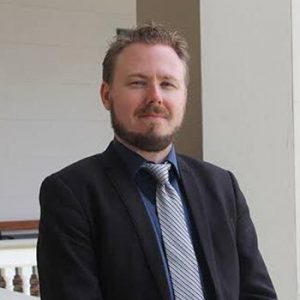 |
Mag. Igor AntonissenHe has studied at the Faculty of Letters and Philosophy at the University of Ghent, Belgium, where he obtained a Master's degree in History (2008). He then continued complementary teaching studies at the same university (2009). He is currently carrying out doctoral studies in humanities at the University of Piura. Between 2011 and 2018, she taught courses in art history, culture, and aesthetics (undergraduate and graduate levels) at the Peruvian University of Art ORVAL. Since 2017, she has been a professor in the Department of History and Art at the University of Piura (Lima campus). |
|
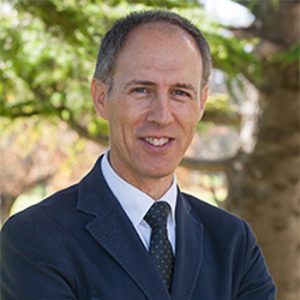 |
Dr. Javier AvanzaFull Professor of Art History at the University of Navarra. He also teaches Master's level courses at the University of Las Palmas. He has furthered his training through research stays at European and Mexican institutions. His research focuses on the protection of artistic heritage; ephemeral and emblematic art; and art of the Modern and Contemporary periods. He participates in several funded research projects, is a member of scientific committees, and a reviewer for national and international journals. |
|
 |
Mag. Silvia BenedettiSilvia Benedetti is an art historian, curator, and freelance writer based in New York. Her research focuses on opportunities to critically re-evaluate and contextualize the work of peripheral creators within a global framework, as well as the intersection of artistic and political practices. Her previous work experience includes curatorial positions at the Bronx Museum of the Arts, the Cisneros Latin American Art Initiative, the Dia Art Foundation in New York, and the Gego Foundation in Caracas. |
|
 |
Dr. Ana MoscosoShe holds a doctorate in Educational Sciences and Philosophy from the University of Navarra. She has dedicated much of her work to teaching Philosophy. Her research has also focused on this area, particularly on the work of Leonardo Polo. She is the author of several philosophical research articles and has participated in international conferences on Philosophy and Education. She has taught at Ecuadorian universities and has been a visiting professor in Peru, Colombia, and Kenya. Currently, she is a tenured professor of Anthropology at the University of the Hemispheres and Director of Teaching and Curriculum at the same institution. |
|
 |
Dr. Jorge SebastiánWith a PhD in Art History (2005), he was a professor in the Department of Art History at the University of Valencia from 2000 to 2003 and again since 2014. His research spans diverse fields. He dedicated his doctoral thesis to the visual representation of gender in the Hispanic Monarchy during the Early Modern period, publishing several articles and essays on the subject. He also researches the Italian painter Sofonisba Anguissola (1532-1625). In addition, he has taught numerous courses on digital humanities, particularly on the application of ICT to the study and dissemination of historical heritage. He has also organized numerous exhibitions and conferences on contemporary art. From 2007 to 2014, he was the director of the Mainel Foundation, coordinating international development cooperation projects and cultural programs. Since November 2020, he has served as president of the Foundation. |
|
 |
Dr. Yolanda EspiñaWith a PhD in Philosophy from the University of Navarra and a Higher Diploma in Piano Performance, she is a tenured professor of Aesthetics. She taught at the Catholic University of Portugal until joining the University of Piura in 2018. She pursued doctoral studies in Germany (Munich, with research at the Bochum/Hegel Archive and Hagen) and postdoctoral studies in Barcelona. She worked as a researcher at the John Cage Trust (New York). She was a Lady Davis Fellow at the Hebrew University of Jerusalem. A visiting professor at the Universities of Valladolid, São Paulo, La Sabana, Vigo, Navarra, and Porto, she has published extensively in the fields of philosophy of art, political thought, and contemporary philosophy. She has coordinated several competitively funded national and international research projects, focusing, among other topics, on the intersections between contemporary thought and avant-garde artistic creation. |
|
 |
Dr. Maria Inés MigliaccioJournalist and philosopher. Since 2014, she has been a professor at the Centro Universitário Belas Artes in São Paulo, Brazil, where she teaches Anthropology, Aesthetics, and Communication to students in various programs, including Visual Arts, Design, International Relations, Animation, Sound Recording, Journalism, Public Relations, Advertising and Public Relations, and Radio and Television. She holds a PhD in Philosophy from the Institute for Business and Humanism at the University of Navarra. She has also completed postgraduate studies in sociology and anthropology at King's College London. |
|
 |
Dr. Pablo SebastiánProfessor of History and Art at the University of Piura. He holds a PhD in Art History from the University of Valencia (Spain) for his dissertation, "Epistolary Relationship between the Painters Ricardo Flórez and Felipe Cossío: Two Processes of Estrangement in Contemporary Peruvian Painting." He has served as Vice Dean of Research at the Faculty of Humanities of the University of Piura and as Director of the Department of History and Art at the same institution. |
|
 |
Mag. Berenice MartinezShe completed her undergraduate studies in Cultural Development at the Autonomous University of Nayarit (Mexico) and her postgraduate studies at the Pontifical Catholic University of Peru, where she earned a Master's degree in Cultural Studies. She has received specialized training in Image Analysis and Documentary Photography from the Center for Image and the National Photo Library of the INAH (National Institute of Anthropology and History), both in Mexico. She has contributed to the development and curation of photographic collections for INAH photo libraries in Mexico (Morelia, Michoacán, and Tepic, Nayarit). She has specialized in research and teaching in Photography, giving courses at universities in Mexico (University of California and Vizcaya University in Tepic, Nayarit). In Peru, she has taught at the Peruvian University of Art ORVAL (2010-2012) and at the Institute of Photography (2012). She has been a guest lecturer in Photojournalism for the History of the Press in Mexico course at the University of Guadalajara. |
National teachers
 |
Mag. Cristina VargasMaster's degree in Art History and Heritage from the Université Michel de Montaigne and Master's degree in Museology from the École du Louvre. Bachelor of Arts in Liberal Arts with a major in History from the University of Piura. She has completed internships at the Museum of the Americas and the Museum of Aquitaine. She holds a Diploma in Museology and Museography from the National University of San Marcos. She is currently President of the Board of Directors of the National Association of Museologists of Peru (ANAMUP). Co-author of the book Taking Root in Fertile Soil: Chinese Immigrants on the North Coast of Peru, 1876-1940 (2016) and author of several articles on museology and art in northern Peru. |
|
 |
Mag. Abril CarazasMaster's degree in Cultural Management from the Open University of Catalonia, Barcelona. Bachelor's degree in Performing Arts from the Pontifical Catholic University of Peru. Specialized diplomas in Dance from New York. Six years of experience in university teaching and four years of experience in general production. events and artistic shows and 2 years of experience in Cultural Management. |
|