The congress “Sustainability and Integral Ecology in Business and Law: Ten years after Laudato Yeah“ It will be held at the Lima Campus of the University of Piura in Lima, on July 1 and 2, 2025.
In honor of the tenth anniversary of the ecological encyclical Laudato Yes: On the care of the common home of Pope Francis, we seek to study the implications of “integral ecology” in business and law.
This encyclical introduced the term “integral ecology” into Catholic social doctrine, calling for an awareness of the interconnection between human beings and nature. Based on the belief in the Creator, integral ecology appeals to our ecological justice and spirituality in relation to creation, beyond the duty to manage nature responsibly.
Catholic social thought uses the term “integral ecology” as a synonym for sustainability. This notion includes human ecology in relation to faith, family, and the most vulnerable. It also defines our relationship and commitment to nature in the areas of business and law.

Chancellor of the Pontifical Academy of Sciences and the Pontifical Academy of Social Sciences, and Prefect Emeritus of the Dicastery for Promoting Integral Human Development. He was born in Ghana in 1948 and ordained a priest in 1975. He trained in Theology and Sacred Scripture in Rome and the United States. He was Archbishop of Cape Coast (1992-2009) and President of the Pontifical Council for Justice and Peace (2009-2016). He has participated in important ecclesiastical bodies and in the conclaves of 2005 and 2013. He speaks six languages and has received numerous honorary distinctions. He was created a cardinal by Saint John Paul II in 2003.
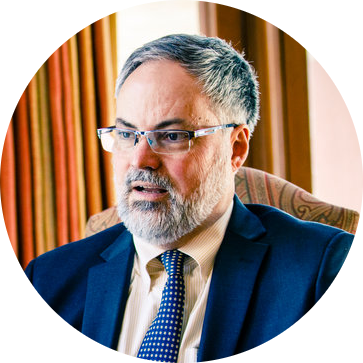
Academic Dean and Professor of Moral Theology at The Saint Paul Seminary School of Divinity at the University of St. Thomas in St. Paul, Minnesota. He earned his doctorate in 1994 from Marquette University, his master's degree in 1987 from Saint Louis University, and his bachelor's degree in 1982 from Creighton University. His teaching and research interests include Fundamental Moral Theology and Thomistic Moral Theology. In addition to his academic work, Dr. Thompson has published numerous essays and articles on moral theology and environmental ethics, highlighting his contribution to the dialogue between faith and ecology.
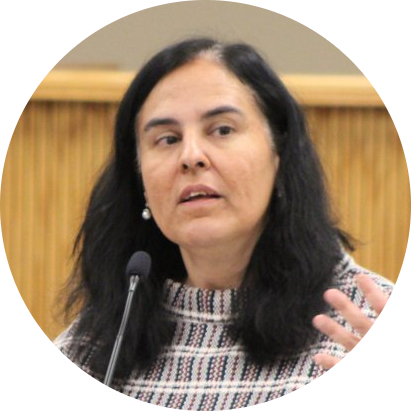
Associate Dean for Research and Professor of Law at the Columbus School of Law at The Catholic University of America. She specializes in environmental law, Catholic social thought, property rights, and the rights of the elderly and persons with disabilities. She has held various academic and administrative positions, including the director of the Summer Law Program in Rome. She is the author of the column "On Ordinary Times" and has published in The Wall Street Journal, National Review, and The Washington Post. She has been a commentator on EWTN, NPR, and other outlets, and her scholarly work explores the intersection of ethics, law, and Catholic social teaching.
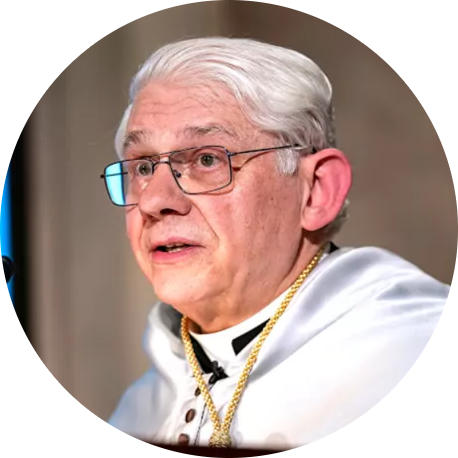
Professor Emeritus of Business Ethics at IESE Business School. He holds a PhD in Industrial Engineering from the Universitat Politècnica de Catalunya, as well as a PhD in Theology from the University of Navarra. He was a professor of Chemical Technology before joining IESE in 1986. A specialist in business ethics, corporate social responsibility and Christian social thought, he has published more than 70 academic articles and numerous books on ethics and humanistic management. He is the founder of the IESE Center for Business and Society and organizer of the International Symposiums on Ethics, Business and Society. He has been editor of the Journal of Business Ethics and collaborates with various academic journals.
The conference “Sustainability and Integral Ecology in Business and Law: Ten years after Laudato SYo“ It is aimed at academics, legal and business professionals, business leaders, policy makers, members of civil society and all those interested in the intersection between ethics, sustainability and economic development.
This event offers a unique opportunity to delve deeper into the concept of integral ecology and its impact on decision-making in the business and legal world. Through lectures, panel discussions and networking with international experts, participants will be able to explore innovative solutions and approaches based on the Social Doctrine of the Church.
If you want to better understand how sustainability and social justice can be integrated into your profession and contribute to a more responsible future, this conference is for you. Register now and be part of the global dialogue on ecology and human development.
Record
Tuesday, July 1, 2025
Wednesday, July 2, 2025
*The schedule will be updated soon with more details on the planned activities.
We firmly believe that the Internet should be available and accessible to everyone, and we are committed to providing a website that is accessible to as many people as possible, regardless of their circumstances and abilities.
To comply, we aim to adhere as closely as possible to the World Wide Web Consortium (W3C) Web Content Accessibility Guidelines 2.1 (WCAG 2.1) at level AA. These guidelines explain how to make web content accessible to people with a wide range of disabilities. Complying with these guidelines helps us ensure that the website is accessible to all people: blind people, people with motor, visual, cognitive impairments, etc.
This website uses various technologies to make it as accessible as possible at all times. We use an accessibility interface that allows people with specific disabilities to adjust the UI (user interface) of the website and design it according to their personal needs.
Additionally, the website uses an AI-based application that runs in the background and constantly optimizes its accessibility level. This application corrects the HTML code of the website, adapts its functionality and behavior to screen readers used by blind users and keyboard functions used by people with motor disabilities.
If you have detected any errors or have ideas to improve it, we will be happy to receive them. You can contact the website operators through the following email jose.rodriguez.co@udep.edu.pe
Our website applies the ARIA (Accessible Rich Internet Applications) attribute technique, along with various behavioral changes, to ensure that blind users who visit us with screen readers can read, understand and enjoy the functions of the website. As soon as a user with a screen reader enters your website, they are immediately prompted to enter their screen reader profile so they can navigate and use your website effectively. Here's how our website covers some of the most important requirements for screen readers, along with console screenshots of code examples:
Optimization for screen readers: We run a background process that learns website components from top to bottom, ensuring continuous compliance even when the website is updated. In this process, we provide screen readers with meaningful data using the ARIA attribute set. For example, we provide precise labels for forms, descriptions of actionable icons (social media icons, search icons, cart icons, etc.), guidance for validation of form inputs, functions of elements such as buttons, menus, Modal dialogs (pop-ups) and others. Additionally, the background process scans all images on the website and provides an accurate and meaningful description based on object recognition as an ALT (alternative text) tag for images that are not described. It will also extract the texts that are embedded in the image, using OCR (optical character recognition) technology. To activate screen reader settings at any time, users simply press the Alt+1 keyboard combination. Screen reader users also receive automatic prompts to activate screen reader mode as soon as they enter the website.
These settings are supported by all common screen readers, including JAWS and NVDA.
Keyboard navigation optimization: The background process also adjusts the HTML of the website and adds various behaviors using JavaScript code so that the website can be operated with the keyboard. This includes the ability to navigate the website with the Tab and Shift+Tab keys, operate dropdowns with the arrow keys, close them with Esc, activate buttons and links with the Enter key, navigate between radio elements and checkboxes with arrows on the keyboard, and fill them with the space bar or the Enter key. In addition, keyboard users will find quick navigation and content skip menus, available at any time by pressing Alt+1, or as the first elements of the site when browsing with the keyboard. The background process also handles triggered popups by moving keyboard focus toward them as soon as they appear, and not allowing focus to move away from them.
Users can also use shortcuts such as "M" (menus), "H" (headers), "F" (forms), "B" (buttons), and "G" (graphics) to jump to specific elements.
Our goal is to offer compatibility with the greatest possible number of browsers and supporting technologies, so that our users can choose the tools that best suit their needs, with the fewest possible limitations. Therefore, we have worked very hard to be compatible with major systems, which account for more than 95% of user market share, including Google Chrome, Mozilla Firefox, Apple Safari, Opera and Microsoft Edge, JAWS and NVDA (screen readers ), for both Windows and MAC users.
Although we make every effort to enable anyone to adapt the website to their needs, there may still be pages or sections that are not fully accessible, are in the process of becoming so, or lack an appropriate technological solution to make them accessible. Still, we are continually improving our accessibility, adding, updating and improving its options and features, and developing and adopting new technologies. All this in order to achieve the optimal level of accessibility, following technological advances. If you need help, contact jose.rodriguez.co@udep.edu.pe