




Dates
June 24th and 25th, 2024.
Location
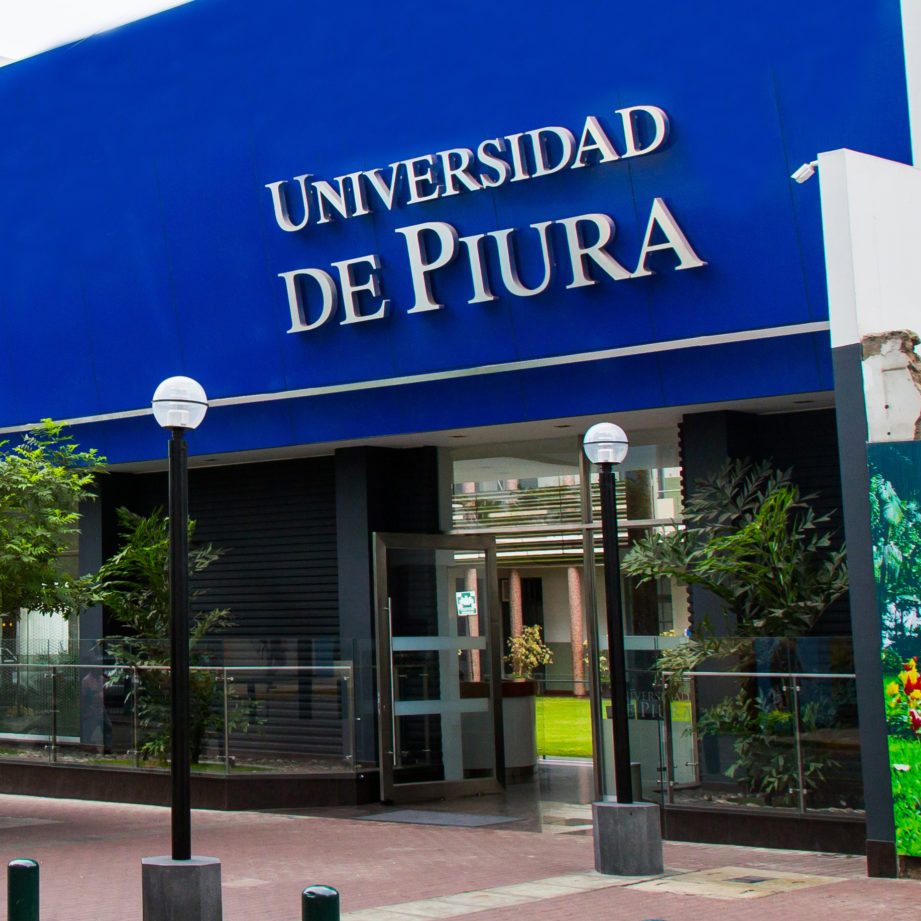
University of Piura
Calle Mártir Olaya 162, Miraflores. Lima, Peru.
Keynote Speakers
Dr. John Duffy (UC Irvine).
Dr. Sevgi Yuksel (UC Santa Barbara).
The Center for Research in Experimental Economics (BELIEVE) at the University of Piura (UDEP), Peru, with the support of the University of Gothenburg (UGOT), Sweden, and the University of Stavanger (UiS), Norway, is organizing its first Workshop in Experimental Economics, which will take place on June 24th and 25th, 2024, at the Miraflores campus of UDEP in Lima, Peru.
This workshop is a great opportunity for researchers in experimental economics, behavioral economics, and related fields, who wish to present and receive feedback on their work, whether completed or in progress. We especially encourage the participation of Latin American scholars. All presentations will be conducted in English.
The workshop aims to fulfill the following objectives:
We are excited to host this two-day in-person Workshop on Experimental Economics, and hope to see you in Lima. Join us to explore, learn and collaborate in the exciting field of experimental economics!

John Duffy is Professor of Economics at the University of California, Irvine (UCI) and is also affiliated with the Institute of Social and Economic Research (ISER) at Osaka University. From 1992-2014 John was Professor of Economics at the University of Pittsburgh. He earned an AB in Economics from the University of California, Berkeley in 1986 and a Ph.D. in Economics from the University of California, Los Angeles in 1992. John's research interests lie in behavioral and experimental economics, game theory, finance and macroeconomics. He is currently Co-Editor of the journal Experimental Economics and Co-Director of UCI's Experimental Social Science Laboratory (ESSL).

Sevgi Yuksel is an Associate Professor of Economics at the University of California, Santa Barbara. She obtained her Ph.D. in Economics at New York University, and she is currently a Visiting Associate Professor there. Prof. Yuksel's research focuses on experimental and behavioral economics, as well as applied theory. In the last five years her research has been published in the American Economic Review, Econometrica, Quarterly Journal of Economics, International Economic Review, Journal of the European Economic Association, among others. She is currently an Associate Editor at Econometrica and the Journal of the European Economic Association.
We invite researchers, academics and practitioners to present their work in experimental economics, experimental finance, behavioral economics, or related fields. Scholars from Latin/South America are especially encouraged to apply.
All presentations at the Workshop will be on-site. There will be no links for virtual access.
The Workshop will take place at the Universidad de Piura's Miraflores campus in Lima, Peru. The campus is located just half a block from MIraflores's Central Park (also known as “Parque Kennedy”).
Miraflores is a coastal district within Lima, Peru, with beautiful ocean views and bustling atmosphere. There are a variety of places to visit as well as eat world-renowned Peruvian cuisine, making it a great place to stay. Hence, it is an excellent spot to enjoy both nature and city life.
There are many different accommodation options within walking distance from UDEP's Miraflores campus, ranging from hotels to hostels to short-term housing rentals. UDEP can refer participants to hotels with which it has negotiated corporate rates. If you would like more information about it, please contact cree@udep.edu.pe.
We recommend that you book your accommodation within walking distance, to avoid Lima's 'infamous' traffic congestions.
In general Miraflores is a relatively safe district, even at night. However, as in most Latin American cities, you should always be cautious and aware of your surroundings, staying in well-lit and populated areas, and not carrying valuables or large amounts of cash.
There is a shuttle bus offering services from Lima airport (Jorge Chávez) to Miraflores, and back (https://www.airportexpresslima.com/). There are also several authorized cab companies at the airport, with stands right after going through customs. Alternatively, you can ask your accommodation to pre-arrange a taxi for you.
To move around Lima, you can use Uber or Cabify. We strongly advise you against hailing a cab from the street (do so at your own risk).
You can find additional information about tourism in Miraflores here (https://www.miraflores.gob.pe/turismo/, only in Spanish) and about Lima here (https://www.peru.travel/en/destinations/lima).
We firmly believe that the internet should be available and accessible to anyone, and are committed to providing a website that is accessible to the widest possible audience, regardless of circumstance and ability.
To fulfill this, we aim to adhere as strictly as possible to the World Wide Web Consortium’s (W3C) Web Content Accessibility Guidelines 2.1 (WCAG 2.1) at the AA level. These guidelines explain how to make web content accessible to people with a wide array of disabilities. Complying with those guidelines helps us ensure that the website is accessible to all people: blind people, people with motor impairments, visual impairment, cognitive disabilities, and more.
This website uses various technologies designed to make it as accessible as possible at all times. We use an accessibility interface that allows people with specific disabilities to adjust the website's UI (user interface) and design it to their personal needs.
Furthermore, the website employs an AI-based application that operates in the background, continuously optimizing its accessibility level. This application remediates the website's HTML, adjusts its functionality and behavior for screen readers used by visually impaired individuals, and for keyboard navigation utilized by those with motor impairments.
If you've found a malfunction or have ideas for improvement, we'll be happy to hear from you. You can reach out to the website's operators by using the following email: jose.rodriguez.co@udep.edu.pe
Our website implements the ARIA (Accessible Rich Internet Applications) technique, along with various other behavioral changes, to ensure that blind users visiting with screen readers can read, comprehend, and enjoy the website's functions. As soon as a user with a screen reader enters your site, they immediately receive a prompt to enter the Screen Reader Profile so they can browse and operate your site effectively. Here's how our website covers some of the most important screen reader requirements, along with console screenshots of code examples:
Screen-reader optimization: We run a background process that learns the website's components from top to bottom, ensuring ongoing compliance even when updating the website. In this process, we provide screen readers with meaningful data using the ARIA set of attributes. For example, we provide accurate form labels; descriptions for actionable icons (social media icons, search icons, cart icons, etc.); validation guidance for form inputs; and element roles such as buttons, menus, and modal dialogs (popups). Additionally, the background process scans all of the website's images and provides an accurate and meaningful image-object-recognition-based description as an ALT (alternate text) tag for images that are not described. It will also extract texts embedded within images using OCR (optical character recognition) technology. To turn on screen reader adjustments at any time, users simply need to press the Alt+1 keyboard combination. Screen reader users also receive automatic announcements to turn on Screen Reader Mode as soon as they enter the website.
These adjustments are compatible with all popular screen readers, including JAWS and NVDA.
Keyboard navigation optimization: The background process also adjusts the website's HTML and adds various behaviors using JavaScript code to make it operable by keyboard. This includes the ability to navigate the website using the Tab and Shift+Tab keys, operate dropdowns with the arrow keys, close them with Esc, trigger buttons and links using the Enter key, navigate between radio and checkbox elements using the arrow keys, and fill them in with the Spacebar or Enter key. Additionally, keyboard users will find quick navigation and content-skip menus, available at any time by clicking Alt+1, or as the first elements of the site while navigating with the keyboard. The background process also handles triggered popups by moving the keyboard focus towards them as soon as they appear, and not allowing the focus to drift outside of them.
Users can also use shortcuts such as “M” (menus), “H” (headings), “F” (forms), “B” (buttons), and “G” (graphics) to jump to specific elements.
We aim to support the widest possible range of browsers and assistive technologies so that our users can choose the tools that best suit their needs, with as few limitations as possible. Therefore, we have worked very hard to support all major systems that account for over 95% of the user market share, including Google Chrome, Mozilla Firefox, Apple Safari, Opera, and Microsoft Edge, as well as JAWS and NVDA (screen readers), for both Windows and Mac users.
Despite our very best efforts to allow anyone to adjust the website to their needs, there may still be pages or sections that are not fully accessible, are in the process of becoming accessible, or are lacking an adequate technological solution to make them accessible. However, we are continually improving our accessibility, adding, updating, and improving its options and features, and developing and adopting new technologies. All of this is intended to reach the optimal level of accessibility, following technological advancements. For any assistance, please reach out to jose.rodriguez.co@udep.edu.pe